
 Order E-Sticker
 Български
 Čeština
 Dansk
 Deutsch
 Ελληνικά
 Eesti
 Español
 Français
 Hrvatski
 Italiano
 Latviešu
 Lietuvių
 Magyar
 Nederlands
 Norsk bokmål
 Polski
 Português
 Română
 Slovenčina
 Slovenščina
 Suomi
 Svenska
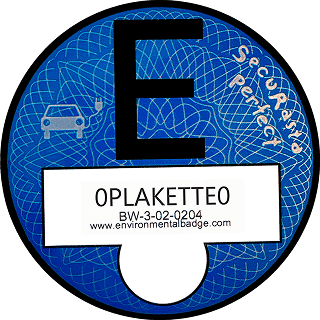


Who can get an E-Sticker?
You can qualify for an E-Sticker if your vehicle is registered outside Germany and is a battery-electric vehicle (BEV), a fuel-cell electric vehicle (FCEV), or a plug-in hybrid (PHEV) that meets at least one of these criteria: CO₂ emissions of 50 g/km or lower, or an electric-only range of at least 40 km. Petrol and diesel vehicles (including EURO 6), mild hybrids (non-plug-in), and PHEVs that do not meet these criteria are not eligible.
If your vehicle is registered in Germany and has an E-Kennzeichen, you do not need a blue E-Plakette. The E-Kennzeichen serves as the equivalent EV identification, so we cannot issue a separate E-Plakette.
Eligible:
- Battery electric vehicle (BEV)
- Fuel cell electric vehicle (FCEV)
- Plug-in hybrid electric vehicle (PHEV)
- Conditions:
- CO₂ ≤ 50 g/km or
- electric-only range ≥ 40 km, if first registered after 2018 or
- electric-only range ≥ 30 km, if first registered before 2018
- Conditions:
Not eligible:
- Petrol/Diesel vehicles (including EURO 6)
- LPG/Gas vehicles
- Mild hybrids
- Non-qualifying PHEV
Who benefits from the E-Sticker?
When the E-Plakette is typically worth getting
The E-Sticker is usually worth getting if your vehicle is registered outside Germany and your home country does not already provide an equivalent electric vehicle marking that Germany recognises.
It helps you take advantage of local electromobility benefits, such as parking benefits (e.g. fee exemptions or time allowances), access to designated roads or lanes, and local access exemptions. These benefits apply only where they have been officially introduced and clearly signposted.
With a valid E-Sticker, you can enter German low emission zones without a green Umweltplakette, as the E-Sticker replaces it for entry into these zones.
